New Commodity: Breathing Life into Old Materials | Mates of the Month
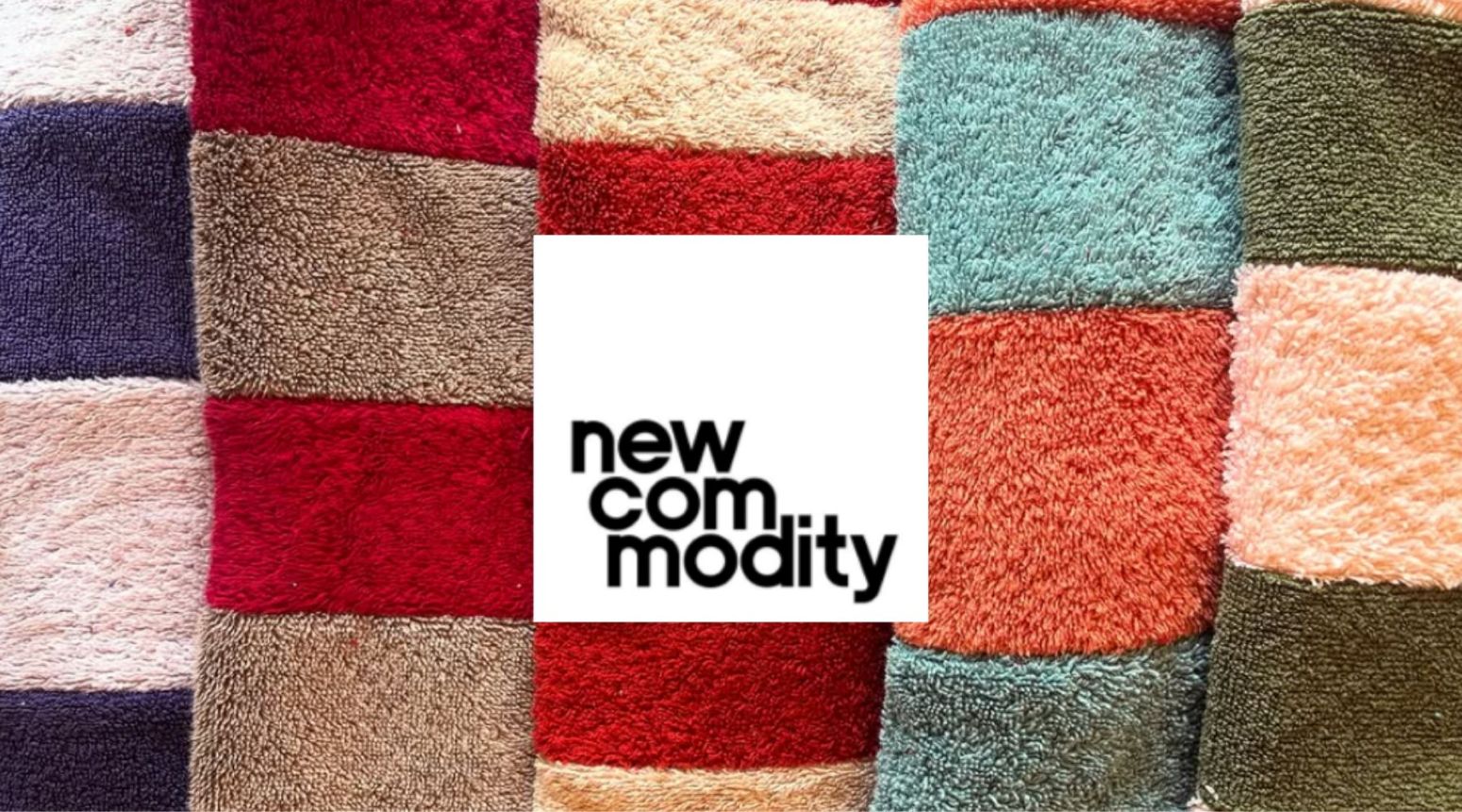
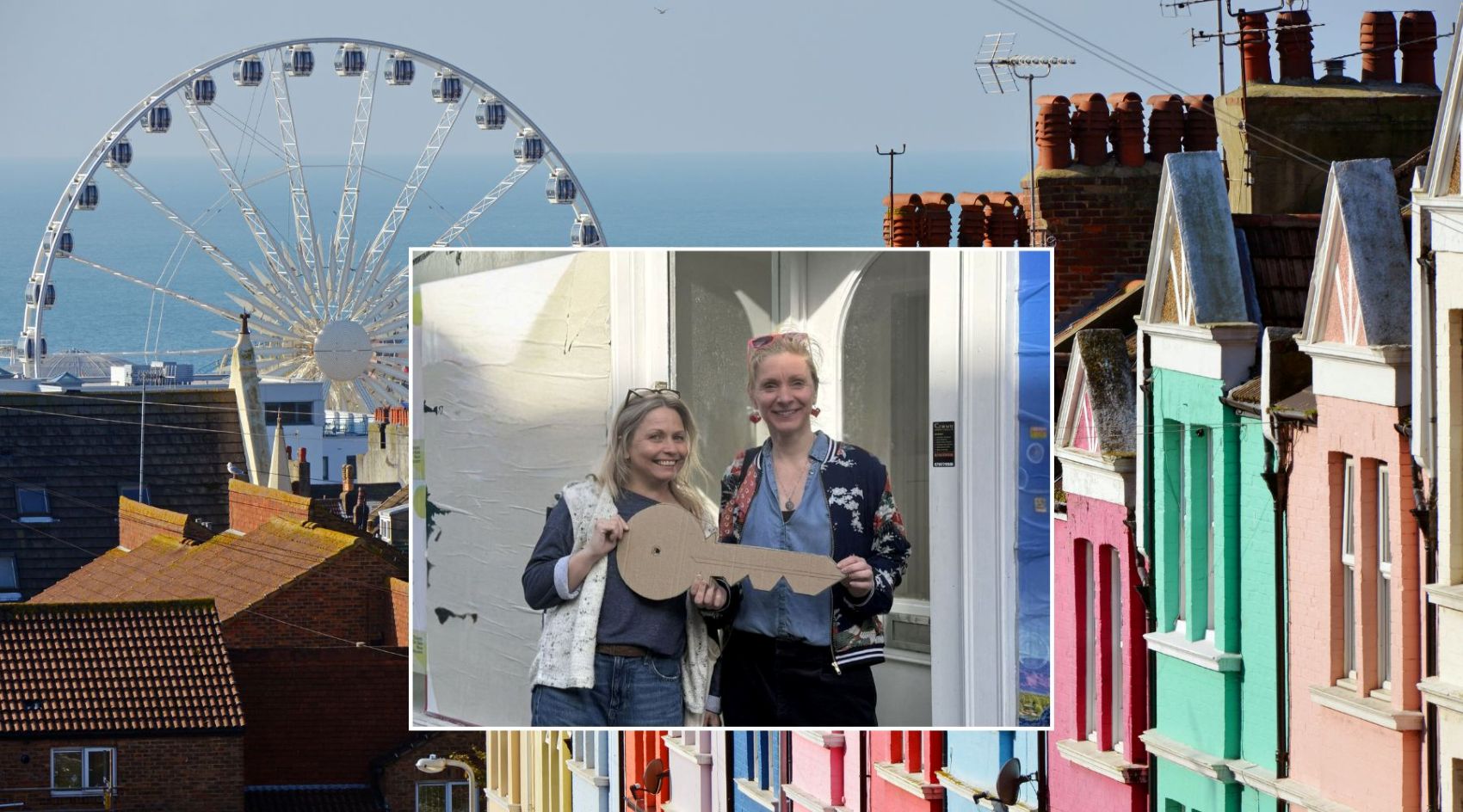
As we make our move to Brighton, giving our organic cotton underwear a new home, one brand we're excited to introduce is New Commodity. New Commodity is a one-woman show led by Hannah Statham. Hannah is committed to taking under-valued materials and upcycling them into unique, quality goods that stand for real change within the fashion industry. Just in time for summer, New Commodity's towel bags and accessories are perfect for beach trips or city days. We reached out to Hannah to find out more about the story behind New Commodity, and why this project is so important.
...

Could you tell us a little bit about the story behind New Commodity, and how it all began?
"After more than 25 years in fashion, most of it spent in the fast-fashion world, I reached a point where I knew something had to change. COVID gave many of us a chance to pause and reflect, and for me it brought a growing feeling that I wanted my work to have a different purpose.
I found myself drawn towards sustainable fashion, first through study and then through working with brands that were genuinely trying to tread more lightly. The more I learned, the more I realised there was another way of creating, one rooted in resourcefulness, creativity and care.
The idea for New Commodity arrived quite unexpectedly. I was on holiday when I spotted a towel bag and couldn't stop thinking about it. Back home, with a friend's birthday approaching, I decided to make my own version. It wasn't part of a grand plan or business strategy. It was simply a thoughtful gift, made by hand.
But that little bag seemed to have a life of its own.
Friends asked where they could get one. Strangers stopped me in the street. Local shops wanted to stock them. What started as a one-off creation quickly became something much bigger. It felt effortless in a way none of my previous business ideas had. Instead of forcing it, I found myself following it.
What excited me most was the process itself. The bags were made entirely from existing materials and components, things that already had a story, a past life, a purpose. Nothing new was created; the magic came from bringing forgotten pieces together and seeing them differently.
That idea became the heart of New Commodity.
The name reflects what I love most: finding value where others might not look for it. Taking what already exists and transforming it into something useful, beautiful and wanted again. Every piece is a reminder that creativity doesn't always begin with something new. Sometimes it begins with seeing something old through fresh eyes.
New Commodity grew from that first bag, but really it grew from a belief, that fashion can be imaginative without being wasteful, and that the things we've overlooked often have the most interesting stories left to tell."

#dontthrowinthetowel is your first surplus textile project, and the idea is to transform towels, an undervalued and often discarded material, into something genuinely useful and beautiful. Why have you decided to start your journey with towels?
"Honestly, towels weren't part of some carefully thought-out plan, they found me rather than the other way around.
My background is in clothing. I've spent my career working with knitwear, jersey, denim and garments, so finding myself building a brand around towels is something I still find quite amusing. It all began with that first bag I made for a friend, and from there the material seemed to choose its own path.
What I've come to love about towelling is that almost everyone has a relationship with it. It's such an everyday object that we rarely stop to think about it, yet it holds so many memories. Since starting New Commodity, I've had countless conversations with people who are instantly transported somewhere when they touch one of the bags, a childhood holiday, days spent at the beach, swimming lessons, family trips, a favourite towel that lived in the airing cupboard. There is a real sense of comfort and familiarity attached to it.
I think that's what makes it such a special material to work with. Towels are often overlooked and undervalued, destined to be discarded once they've served their original purpose. Yet they carry history, character and an emotional connection that many materials don't.
For me, #dontthrowinthetowel is about celebrating that. It's about taking something ordinary and often forgotten and showing that it can have a beautiful and useful second life. The fact that it also sparks stories, memories and conversations wherever it goes is something I never expected, but it's become one of the most rewarding parts of the journey."

You talk about wanting to transform other materials that have 'zero perceived value.' Are you able to tell us which material is next on the list and why?
"At the moment, the next material on the list is... still towels.
One of the biggest shifts for me has been learning to slow down. Having spent so many years in fast fashion, you're conditioned to constantly ask, "What's next?" New season, new product, new trend. There's always pressure to move on before you've fully explored what you're already working with.
With New Commodity, I've found myself taking a different approach. The more I work with towels, the more possibilities I discover. There is still so much to learn about the material, so many opportunities to innovate, and so much work to do in building relationships throughout its entire lifecycle. My focus right now is on understanding that ecosystem more deeply and exploring what it really means to close the loop.
Of course, my notebook is full of ideas. Once you start looking at discarded textiles differently, it's impossible not to see potential everywhere. There are plenty of other materials I'd love to work with one day, and the possibilities feel almost endless.
But I'm trying to resist the urge to rush ahead. New Commodity was built on the belief that value already exists in what we have, and I think that applies to ideas as much as materials. For now, I'm enjoying going deeper rather than wider, trusting that the next textile will reveal itself when the time is right."
Can you explain a little about the meaning behind your name, 'New Commodity'?
"The name New Commodity came from a question I kept returning to: what if the things we no longer value became the things we valued most?
A commodity is traditionally something that is bought, sold and considered useful. Yet so many materials are discarded the moment their original purpose has been fulfilled, even though they still have so much life left in them. I became fascinated by the idea of shifting that perception and creating a new kind of commodity from what already exists.
The word "new" is important too. Not because the materials are new, but because the way we see them is. A worn towel, a forgotten textile, a surplus material, these things aren't waste to me. They are resources waiting for a second story.
In many ways, the name captures the heart of what I'm trying to do. It's about finding value where others don't see it, challenging our ideas of worth, and proving that something overlooked can become something desirable, useful and beautiful again.
New Commodity is really an invitation to look twice. To see possibility instead of waste, and to recognise that sometimes the most valuable things aren't new at all, they've just been reimagined."
 How has your local community played a part in this project?
"The role of my local community in this project has honestly blown me away.
In the past, I think I was often working in a bit of a bubble, surrounded by people who already saw things through a similar lens, or who were already part of the conversation. What I've realised through New Commodity is how different and powerful it is when you step outside of that. Your community isn't separate from your customer base, they are your customer base, and you can be of real value to each other.
Very quickly, I started to see how much curiosity and excitement there is locally. People weren't just interested in the product, they wanted to be part of the process. That has been one of the most unexpected and rewarding parts of this journey.
It's created a really natural exchange. Local businesses and organisations have reached out offering me their lost property or surplus textiles, which in turn become raw materials for the work. They get to see something once forgotten transformed into something desirable, and they're proud to share that story. That visibility then feeds back into the brand and helps grow awareness in a very organic way.
What's been especially powerful is that it doesn't feel like I'm trying to "educate" people in a heavy or preachy way. Instead, it feels like an open invitation, people are drawn in, they get curious, and then they start to see textile waste differently through their own experience.
That shift has created both social and economic value at the same time. Conversations about waste that might never have happened before are now happening quite naturally, and new opportunities are emerging because of it. It's made me realise that local community isn't just a support system, it's part of the ecosystem that makes the whole idea work."

What has been the biggest challenge for you so far?
"The biggest challenge so far has really been the reality of doing almost everything myself.
Who makes the product? Me. Who creates the content? Me. Who sells it, packs it, talks about it, builds the relationships? Also me. And while I genuinely love all of those parts, the reality of running a start-up like this is that it is full-on in a way you can't really prepare for.
At the moment, it can't just exist as a passion project or a hobby, it has to become a model that is sustainable, scalable, and something that could be adopted more widely. That's the challenge I'm sitting with.
There's also a wider tension in the market space I'm working in. On one hand, there's the need to build brand awareness and tell a new story about materials and circularity. On the other, there is the very real necessity of selling product and making it commercially viable in order for any of it to continue.
At the same time, I find myself trying to contribute to a bigger conversation about how the industry operates, how we use materials, how we value waste, and how systems could shift. But the infrastructure we're working within hasn't really caught up with those ideas yet, which makes it particularly challenging for start-ups and SMEs trying to operate differently.
But then, swinging back to community, I've felt a really strong pulling together within this space. There's a sense of people supporting each other rather than competing, which has been quite new for me coming from more traditional fashion environments. The conversations feel different now, less about secrecy and protection, and more about openness, sharing, and collaboration without ego.
So the challenge is really holding all of that at once: building something creative and meaningful, while also making it work in a very real, commercial sense, within an industry that is still catching up with these ways of thinking."

What has been New Commodity's biggest moment so far?
"I don't think there has been one single standout moment so far. It's felt much more like a montage of small, unexpected, and really meaningful moments that have built up over time.
Looking back, it feels less like a single breakthrough and more like lots of small doors opening, one after another, each one leading to the next possibility."
And any plans for the future?
"There are lots of plans for the future, but I'm trying not to rush them.
One of the biggest shifts for me with New Commodity has been learning to slow down and really sit with ideas, rather than moving on too quickly. So, while there are many directions it could go in, and a lot of exciting possibilities, I want to make sure each step is considered and genuinely adds value, rather than just adding noise.
For now, the focus is on continuing to develop what's already here, refining the product, deepening the circular system around it, and strengthening the relationships and networks that are forming around the brand.
Beyond that, there are ideas building all the time, but I'm trusting the timing of them more now. I want New Commodity to grow in a way that feels intentional and grounded, rather than rushed. The future definitely feels full, but I'm learning to let it unfold at its own pace."
 ...
...We're so thrilled to be collaborating with Hannah, and to be bringing her gorgeous towel products with us to Brighton. It's such a privilege to work alongside people and brands who are using their work to genuinely make meaningful change within the fashion industry.
For more brands that we trust and love:
Author: Evie Tucker, Comms and Retail Team, Y.O.U Underwear & Hannah Statham, Founder of New Commodity
Images courtesy of New Commodity Instagram (@new.commodity)

Leave a comment
This site is protected by hCaptcha and the hCaptcha Privacy Policy and Terms of Service apply.